For most Austin buyers, the home inspection is the moment the property stops being a set of listing photos and becomes a set of facts. It happens inside a short window, usually the option period, and decisions made during it can affect thousands of dollars. Dillar Schwartz from, The Dillar Group, prepares every buyer for it in advance, because buyers who understand what an inspection does and does not cover make better decisions under time pressure.
What an Inspection Costs
According to a local brokerage's 2026 guide, standard Austin inspections run about $350 to $675, with an average near $510 for a single-family home under 2,500 square feet. The price depends mostly on size, age, and complexity.
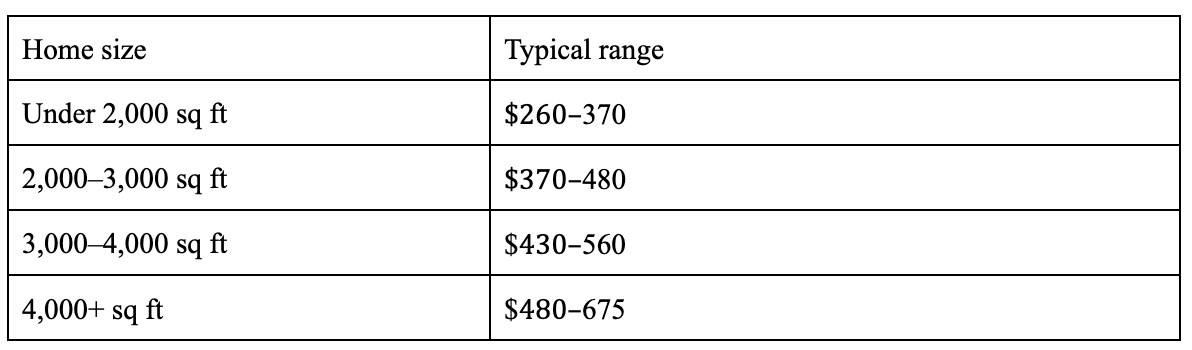
Homes built before 1980 often cost more, because they have more systems to evaluate. Pools, septic systems, and outbuildings usually require add-on inspections.
How Long It Takes
A typical 2,000 to 3,000 square foot home takes roughly two and a half to three and a half hours. An inspector quoting about 90 minutes may be rushing, so buyers should ask how long the inspector typically spends on a home of that size. Buyers are encouraged to attend at least the end of the inspection, when the inspector walks through the findings.
What a Standard Inspection Covers
Texas inspectors follow the Texas Real Estate Commission (TREC) Standards of Practice and report on a standard form. The inspection covers structural components, electrical, HVAC, plumbing, appliances, and optional systems such as pools, wells, and septic. Inspectors evaluate what is present, visible, and accessible. They do not move furniture, open walls, or dig around foundations.
What a Standard Inspection Does Not Cover
This is the part buyers most often miss. A standard inspection generally excludes:
Wood-destroying insect (termite) evaluation
Mold and radon testing
A sewer line camera scope
Structural engineering analysis
Code compliance and cosmetic conditions
Anything concealed or inaccessible
Specialty Inspections and Typical Costs
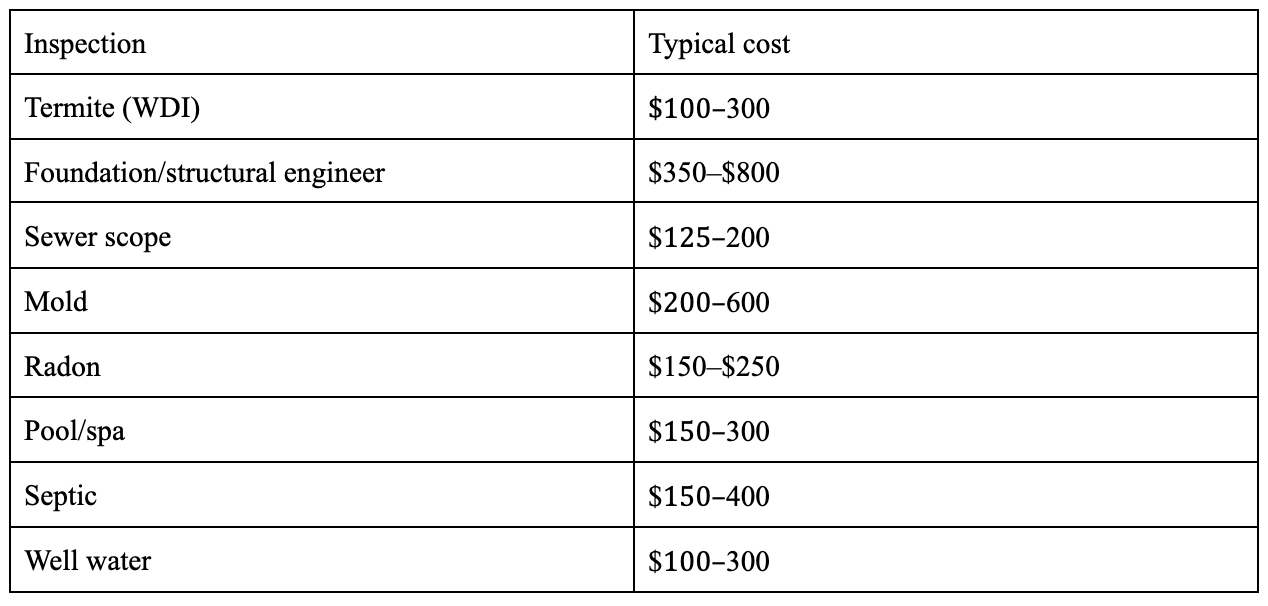
Which add-ons make sense depends on the home. A 1950s bungalow with mature trees may justify a sewer scope. A home on acreage may call for septic and well testing.
Foundations and Austin's Clay Soil
Much of the Austin area sits on expansive clay that swells when wet and shrinks when dry, which can move foundations. Warning signs include diagonal cracks at the corners of walls, gaps between walls and ceilings, doors and windows that stick, sloping floors, and cracks in exterior brick mortar. Cracks wider than about a quarter inch are a signal to bring in a licensed professional engineer. Foundation repair in Austin is cited at roughly $5,000 to $30,000 or more, which is why a buyer should understand the foundation before the option period ends.
"A foundation question answered during the option period is a negotiation. The same question answered after closing is a bill."
The Inspector's Credentials
Texas inspectors are licensed by TREC. Licensed inspectors complete extensive education, including a supervised practicum, pass the national exam, carry liability coverage, and pass a background check. Buyers can look up an inspector's license status and disciplinary history on the TREC license search. The Dillar Group encourages buyers to choose their own inspector rather than simply accepting a recommendation without checking credentials and reviews.
How the Inspection Fits Into the Option Period
In Texas, the option period gives the buyer an unrestricted right to terminate the contract for any reason, in exchange for an option fee. In a typical Austin deal the option period runs about 5 to 10 days, with 7 days common, and the inspection and repair negotiations happen inside it.
If the inspection reveals problems, buyers generally have these choices:
Request repairs, a price reduction, or seller credits through a contract amendment.
Accept the home as-is and move forward.
Terminate within the option period, losing only the option fee.
Request an extension, which the seller is not obligated to grant.
The seller is not required to agree to any request, so it helps to prioritize. Safety, structural, and major-system issues usually matter more than cosmetic ones.
The Honest Take
An inspection is not a guarantee, and it is not a pass-or-fail test. Every home, including a new one, has findings. The goal is to understand what you are buying, what it may cost, and whether the price still makes sense. Buyers who treat a long report as a reason to panic, or a short report as a reason to relax, are both misreading it.
A Simple Preparation Checklist
Book the inspector the day the contract is signed, since schedules fill quickly.
Ask what is and is not included, and add specialty inspections that fit the home.
Attend the end of the inspection to ask questions.
Decide your priorities before the negotiation starts.
If you're considering buying a home in Austin, The Dillar Group would be glad to help. Get our buyer inspection checklist.