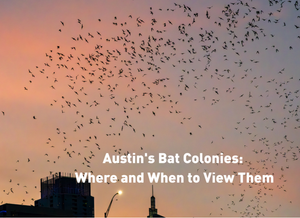
Every evening from roughly mid-March through late October, an estimated 1.5 million Mexican free-tailed bats pour out from beneath the Congress Avenue Bridge and stream across the downtown Austin sky — the largest urban bat colony in North America, and one of the city's most distinctly Austin experiences. The Dillar Group sends this guide to nearly every relocating client, because the bats are genuinely one of the best free things to do here, but showing up at the wrong time or standing in the wrong spot is a common newcomer mistake.
When the Bats Actually Fly
The Congress Avenue Bridge colony is seasonal, present roughly from mid-March through late October or early November, following a predictable migration pattern. Emergence generally happens 30–60 minutes before sunset, which means actual viewing times shift throughout the season. Starting as early as 7:30 PM in early spring and as late as 9:00 PM during peak summer. Checking the current sunset time before heading out, and planning to arrive at least 30–60 minutes early for a good spot, saves a wasted trip.
Weather affects the show significantly. Hot, dry evenings tend to produce the most dramatic, early emergences, while cool or rainy conditions can delay the flight or reduce it to a smaller, less spectacular showing. There's also a natural lull in late May through mid-July, when the colony is a maternity roost and pups are being born and learning to fly — worth knowing if a visit during that window feels less impressive than expected.
Peak Season
Late July through August is widely considered the best window for a truly spectacular showing, as that year's pups join the nightly flight alongside the adult colony, dramatically increasing the visible numbers. Spring migration in mid-March through mid-April is a strong second option, offering a robust flight without the peak-season crowds.
Where to Actually Stand
The bridge itself offers a free, straightforward view, but it gets crowded and can leave shorter visitors and kids without a clear sightline. The Austin American-Statesman's Bat Observation Area, on the southeast side of the bridge near South Congress Avenue, offers a dedicated, less packed vantage point with educational kiosks, and it's accessible for visitors with disabilities. The Vic Mathias Shores area, just east of the bridge along the hike-and-bike trail, is another solid free option with a clear line of sight as the bats head east along the lake.
"First-timers always ask which side of the bridge is better — the south side tends to backlight the bats against whatever light is left in the sky, which usually makes for the best viewing and photos."
A Few Practical Notes
Free parking is available at Vic Mathias Shores (900 Riverside Drive) for early arrivals, and additional free parking can be found near 834 South Congress Avenue, a short walk from the bridge. Paid parking options exist closer to the bridge itself for those arriving later or wanting a shorter walk. For a more elevated (and less crowded) experience, several restaurants and hotel rooftops near the bridge , including spots along South Congress and at hotels overlooking Lady Bird Lake, offer bat-watching views alongside dinner or drinks, worth considering for a date night or hosting out-of-town guests.
A paddleboard, kayak, or guided boat tour on Lady Bird Lake offers a genuinely different vantage point, watching the bats stream directly overhead rather than from the bridge or shoreline — a popular option for visitors wanting something a bit more memorable than standing on a sidewalk.
If You're New Here
Locals treat a summer bat-watching evening the way visitors from other cities might treat a fireworks show — casual, recurring, and often paired with a picnic, a drink, or a walk along the lake rather than treated as a single big event. Austin has fully embraced the bats as part of its civic identity; Bat Fest, held annually near the bridge in late summer, turns the phenomenon into a full festival with live music and food vendors, while the rest of the season it's simply part of a normal evening in the city for longtime residents.
A Note for First-Timers
Not every night delivers the full spectacle — weather, season, and even the colony's own internal patterns mean some evenings produce a modest trickle rather than a dramatic column of a million-plus bats. Locals tend to treat this with a shrug rather than disappointment, since the experience itself is part of the appeal regardless of the size of that particular night's flight. Checking the city's Bat Hotline or a current bat-tracking resource before heading out can help set expectations for a specific evening, particularly outside the reliable peak-season window.
If you're moving to Austin and want to live near the things you love most, The Dillar Group can help you find which neighborhoods match your lifestyle. Get a downtown-area neighborhood guide.