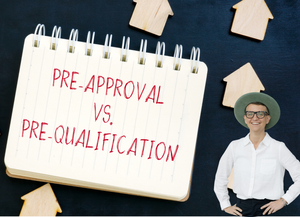
"I'm pre-qualified" and "I'm pre-approved" sound close enough that a lot of first-time buyers use the two terms interchangeably. In practice, they represent meaningfully different levels of lender verification — and in Austin's current market, the difference can determine whether a seller takes an offer seriously. Dillar Schwartz, with The Dillar Group covers this distinction with every first-time buyer before a single home tour, because showing up with the wrong one can cost a buyer a home they'd otherwise have gotten.
What Pre-Qualification Actually Is
Pre-qualification is a rough, preliminary estimate based on information a buyer self-reports to a lender — income, debts, and assets that aren't independently verified at this stage. It typically takes just a few minutes, sometimes entirely online without speaking to a loan officer, and produces a general estimate of what a buyer might be able to borrow. It's a useful first step for understanding a rough budget, but it carries little weight in an actual offer negotiation, because the lender hasn't confirmed any of the numbers behind it.
What Pre-Approval Actually Requires
Pre-approval involves a lender actually verifying income, employment, assets, and credit through documentation, pay stubs, tax returns, bank statements, and a credit pull — before issuing a conditional commitment for a specific loan amount. This process typically takes anywhere from a few days to about a week, depending on how quickly documentation is provided, and results in a pre-approval letter that carries real weight when submitted alongside an offer.
The distinction matters because a pre-approval letter tells a seller that a lender has already confirmed the buyer can plausibly close at the stated amount, barring anything unusual turning up during full underwriting. A pre-qualification letter offers no such assurance, since none of the underlying numbers have been checked.
Why This Matters More in Austin Right Now
Even with more inventory and less frantic bidding than a few years ago, well-priced homes in desirable Austin neighborhoods still move quickly, and sellers and their agents routinely ask which type of letter accompanies an offer before deciding how seriously to engage. An offer backed by a pre-qualification alone can read as meaningfully weaker than a comparable offer backed by full pre-approval, even at the same price, because the seller's risk of a financing fall-through looks different in each case.
"A pre-qualification tells a seller what a buyer thinks they can afford. A pre-approval tells a seller what a lender has actually confirmed. Those are two very different levels of confidence."
The Dillar Group recently worked with a first-time buyer who toured with only a pre-qualification letter and lost out on a competitive offer to a buyer with full pre-approval, despite both offers being priced similarly. The buyer got pre-approved before the next tour, and the difference in how sellers responded was immediate and noticeable.
What Pre-Approval Actually Involves Submitting
Most lenders will ask for recent pay stubs (typically the last 30 days), the past two years of W-2s or tax returns, two to three months of bank statements, and authorization to pull a credit report. Self-employed buyers often need additional documentation — profit and loss statements or additional tax return years — which is worth starting early given the longer document-gathering process involved.
How Long a Pre-Approval Lasts
Pre-approval letters are typically valid for 60–90 days, after which a buyer may need updated documentation to refresh the letter if the home search runs longer than expected. It's worth asking a lender directly about the specific expiration date on a given pre-approval, particularly for buyers anticipating an extended search, so the letter doesn't quietly lapse in the middle of an active offer process.
Avoiding the Common Mid-Search Mistakes
Once pre-approved, it's worth avoiding a few actions that can jeopardize the approval before closing: opening new credit accounts, making large purchases on existing credit cards, changing jobs, or making large, undocumented cash deposits into a bank account. Lenders typically re-verify key details shortly before closing, and any of these can trigger a need for additional documentation or, in some cases, put the approved loan amount at risk. It's a common enough issue that most lenders will specifically warn buyers about it during the pre-approval conversation — worth taking seriously even when it feels overly cautious.
Getting Started
The practical takeaway: pre-qualification is a fine first step for understanding a rough budget before starting to look seriously, but it shouldn't be mistaken for something that will carry weight once an actual offer is on the table. Moving to full pre-approval before touring homes in earnest not after finding "the one" — puts a buyer in a position to move quickly and be taken seriously the moment the right home appears.
If you're ready to start the pre-approval process, The Dillar Group can connect you with lenders who move efficiently. Get a lender shortlist.